Journal · 1 October 2026 · 10 min read
How to Choose the Best Banarasi Saree for Special Occasions
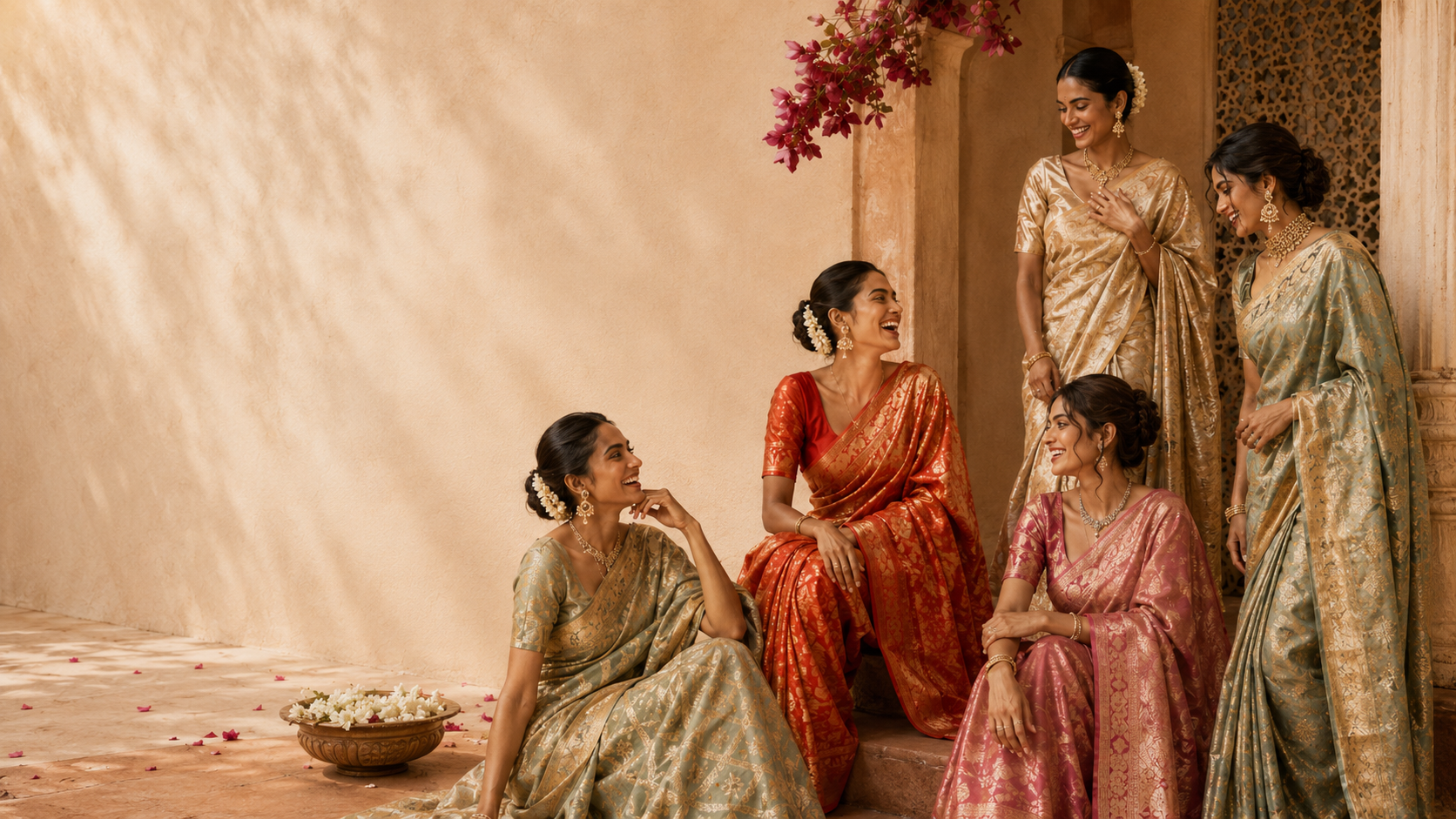
A Banarasi saree is one of the most loved choices for Indian weddings, festivals and traditional celebrations. Known for rich silk, beautiful zari work and detailed patterns, Banarasi sarees can create an elegant look for almost any special occasion.
However, with so many designs, colours, fabrics and weaving styles available, choosing the right saree can sometimes feel confusing. Some Banarasi sarees are rich and heavy, while others are lightweight and easier to carry. The right choice depends on the occasion, your personal style and how you want to wear the saree.
This guide will help you understand how to choose the best Banarasi saree for weddings, festivals, parties and other important events.
What Makes a Banarasi Saree Special?
Banarasi sarees are traditionally associated with Varanasi, also known as Banaras. They are recognised for decorative weaving, zari work and patterns inspired by flowers, leaves and traditional Indian designs.
A Banarasi silk saree can feature fine detailing across the body, border and pallu. Some designs are richly decorated, while others use simpler motifs for a more balanced appearance.
The variety of styles makes Banarasi sarees suitable for different age groups, events and personal preferences.
Choose a Banarasi Saree Based on the Occasion
One of the easiest ways to choose the right saree is to start with the occasion.
A saree that works beautifully for a wedding ceremony may be too heavy for a small family gathering. Similarly, a simple design may not provide the festive appearance you want for a major celebration.
Banarasi Sarees for Weddings
Weddings are a perfect occasion for rich Banarasi silk sarees with detailed zari work.
For wedding functions, you can choose traditional shades such as:
-
Red
-
Maroon
-
Deep green
-
Royal blue
-
Purple
-
Rani pink
-
Mustard
-
Gold
A saree with a broad border and detailed pallu can create a traditional and festive appearance.
If you are the bride or a close family member, you may prefer a heavier saree with more detailed weaving. Wedding guests can choose medium-weight designs that are easier to carry for longer periods.
Banarasi Sarees for Festivals
Festivals such as Diwali, Navratri, Durga Puja and other family celebrations are great occasions to wear a Banarasi saree.
For festive dressing, you do not always need a very heavy saree. A medium-weight Banarasi silk saree with a beautiful border can offer the right balance between traditional style and comfort.
Bright shades such as orange, pink, green, blue and yellow can work especially well for daytime and evening celebrations.
Banarasi Sarees for Engagements and Parties
Engagement ceremonies and family parties often allow more flexibility in styling.
You can choose softer shades, modern blouse designs and lighter Banarasi patterns.
Pastel pink, ivory, beige, lavender, peach and powder blue can give a softer appearance while keeping the traditional character of the saree.
A lighter saree is also easier to style with modern jewellery and accessories.
Understand Different Banarasi Saree Fabrics
The fabric plays an important part in how the saree looks, feels and drapes.
Before buying, read the fabric details carefully so that you know what type of saree you are choosing.
Banarasi Silk Saree
A Banarasi silk saree is a classic choice for traditional occasions.
Silk gives the saree a rich appearance and works beautifully with zari patterns. Depending on the weave and design, some silk sarees may feel heavier while others may have a softer and lighter drape.
Banarasi silk is especially popular for weddings, religious events and festive celebrations.
Banarasi Tissue Silk Saree
A Banarasi tissue silk saree is a good option for women who like a shiny and festive look.
Tissue sarees often have a light-reflecting surface that gives them a distinctive appearance. They can look particularly attractive under wedding or evening lighting.
Gold, silver, champagne and pastel tissue sarees can be styled for receptions, festive events and formal celebrations.
If you prefer something different from a traditional heavy silk look, a Banarasi tissue silk saree can be worth exploring.
Look at the Weaving and Motifs
The beauty of a Banarasi saree often comes from its woven patterns.
Different sarees can feature different types of motifs and layouts.
Popular design elements may include:
Floral Motifs
Flowers and leaves are commonly seen in Banarasi designs.
They give the saree a graceful appearance and work well for weddings, festivals and formal celebrations.
Buti Designs
Small repeated motifs across the body are often called butis.
These designs can make a saree look decorative without making it appear overly heavy.
They are a good choice if you want a traditional saree that can be worn for different occasions.
Jaal Patterns
Jaal-style designs feature detailed patterns spread across a larger part of the saree.
These sarees often have a richer overall appearance and can work well for wedding functions and major celebrations.
Traditional Borders
The border has a strong influence on the overall appearance of a Banarasi saree.
Broad zari borders can create a more traditional and grand look, while narrow borders can make the saree appear lighter and simpler.
Choose the border style according to the occasion and your personal preference.
Choose the Right Colour for Your Occasion
Colour is another important part of selecting a Banarasi saree.
There is no single best colour for everyone. Your choice can depend on the event, time of day and the type of look you want.
For Daytime Functions
Lighter shades can work beautifully for daytime ceremonies.
Consider colours such as:
-
Peach
-
Light pink
-
Mint green
-
Sky blue
-
Ivory
-
Beige
-
Lavender
These shades can create a soft and elegant appearance.
For Evening Functions
Darker colours are popular for evening celebrations.
You can consider:
-
Wine
-
Navy blue
-
Maroon
-
Emerald green
-
Black
-
Deep purple
-
Red
These colours can look particularly striking when combined with zari work.
For Traditional Ceremonies
Red, maroon, green, yellow and gold remain popular for traditional Indian events.
If you want a classic look, these colours are easy to pair with traditional jewellery.
Check the Weight and Comfort
A beautiful saree should also be comfortable to wear.
If you expect to wear the saree for several hours, consider its weight before making your final choice.
Heavy zari work and dense weaving can make some Banarasi silk sarees heavier. They may be suitable for major wedding events but less comfortable for long daytime functions.
For smaller celebrations or longer events, a lighter Banarasi silk saree may be more practical.
Comfort is especially important if you plan to dance, move around frequently or attend a full-day function.
Match the Saree with the Right Blouse
The blouse can completely change the appearance of your Banarasi saree.
A traditional blouse in the same fabric can create a classic look, while a contrasting blouse can make the outfit feel more modern.
Some blouse options include:
-
Plain silk blouse
-
Contrast-colour blouse
-
Zari border blouse
-
Short-sleeve traditional blouse
-
Elbow-length blouse
-
High-neck blouse
-
Sleeveless blouse
For a saree with heavy weaving, a simple blouse can create balance.
If the saree has a simple body, you can experiment with a more detailed blouse.
Choose Jewellery According to the Saree
Jewellery should complement the saree rather than compete with it.
Traditional gold jewellery works especially well with classic Banarasi silk sarees.
Depending on the event, you can consider:
-
Gold necklaces
-
Jhumkas
-
Temple jewellery
-
Kundan jewellery
-
Polki jewellery
-
Bangles
-
Traditional chokers
For a Banarasi tissue silk saree or pastel saree, pearl, kundan or lighter statement jewellery can also create a beautiful look.
If your saree already features heavy zari work, you may prefer fewer jewellery pieces.
Check the Saree Details Before Buying Online
Shopping online makes it easier to explore many Banarasi silk sarees from home, but you should always check the product information carefully before ordering.
Look for details such as:
-
Fabric type
-
Saree length
-
Blouse piece information
-
Border design
-
Pallu design
-
Zari details
-
Colour information
-
Care instructions
-
Product photographs
-
Return and exchange policy
Zoom into product images to understand the weaving and colour as clearly as possible.
If you are buying for an important occasion, avoid choosing only on the basis of one photograph. Read the complete description before making a decision.
Think About How Often You Will Wear It
Before buying a saree, think about how you plan to use it.
If you are looking for a saree mainly for one major wedding function, you may want a rich design with heavy zari work.
If you want something that can be worn several times, choose a more versatile colour and moderate design.
A medium-weight Banarasi silk saree can often be styled differently with different blouses and jewellery, making it useful for multiple occasions.
How to Care for Your Banarasi Saree
Proper care can help maintain the appearance of your saree for years.
Silk and zari should be handled carefully.
Store It Properly
Keep your saree in a clean and dry place.
A cotton or muslin cloth bag can help protect the fabric while allowing it to breathe.
Avoid storing silk sarees in plastic covers for long periods.
Refold Occasionally
Do not leave your saree folded in exactly the same position for years.
Refolding it occasionally can help reduce permanent fold lines, especially around heavily woven sections.
Keep It Away from Moisture
Store your saree away from damp areas.
Moisture can affect silk fabric and zari work.
Avoid Spraying Perfume Directly
Perfume, deodorant and other sprays should not be applied directly to the saree.
Apply them before wearing the saree and allow them to dry.
Follow the Care Label
Always check the specific care instructions provided with the saree.
For delicate silk and zari sarees, professional dry cleaning may be recommended.
Common Mistakes to Avoid When Buying a Banarasi Saree
A few simple mistakes can make it harder to choose the right saree.
Avoid:
-
Choosing only by colour
-
Ignoring fabric information
-
Buying a very heavy saree for a long event
-
Not checking blouse details
-
Ignoring product measurements
-
Selecting a design without considering the occasion
-
Not reading care instructions
-
Buying from a seller without checking return policies
Taking a few extra minutes to review the details can help you choose a saree that you are more likely to enjoy wearing.
Frequently Asked Questions
Which Banarasi saree is best for weddings?
Rich Banarasi silk sarees with detailed zari borders, decorative pallus and traditional colours are popular choices for weddings. The final choice should depend on your role in the wedding, comfort and personal style.
Is a Banarasi silk saree suitable for festivals?
Yes. Banarasi silk sarees are suitable for festivals, religious ceremonies, family events and other traditional celebrations. Lighter designs can be easier to wear for longer festive gatherings.
What is a Banarasi tissue silk saree?
A Banarasi tissue silk saree usually has a shiny appearance and a distinctive texture. It is often selected for festive and formal occasions because of its decorative look.
What colours are popular in Banarasi sarees?
Red, maroon, green, pink, blue, purple, gold and yellow are classic choices. Pastel colours such as peach, lavender, ivory and light pink are also popular for softer styling.
Can Banarasi sarees be worn more than once?
Yes. A versatile Banarasi saree can be restyled with different blouses, jewellery and accessories for different occasions.
Find a Banarasi Saree That Matches Your Style
Choosing the right saree becomes easier when you think about the occasion, fabric, colour, weaving, comfort and styling together. From traditional wedding designs to lighter festive options and elegant Banarasi tissue silk saree styles, there are choices for different tastes and celebrations.
Explore the collection at Kaushah to find designs that suit your next wedding, festival or special event. Choose a Banarasi saree that reflects your personal style and gives you a timeless traditional look for the occasion.
Woven in legacy, draped in you.
Keep reading
More from the Journal


Our Story Continues
A legacy reimagined for the woman of today.
Silk and cotton, organza and georgette, heritage weaves and contemporary design, so every woman can find the drape that feels made for her.