Journal · 17 November 2026 · 8 min read
Designer Banarasi Sarees: How Modern Designers Are Reinventing a Classic
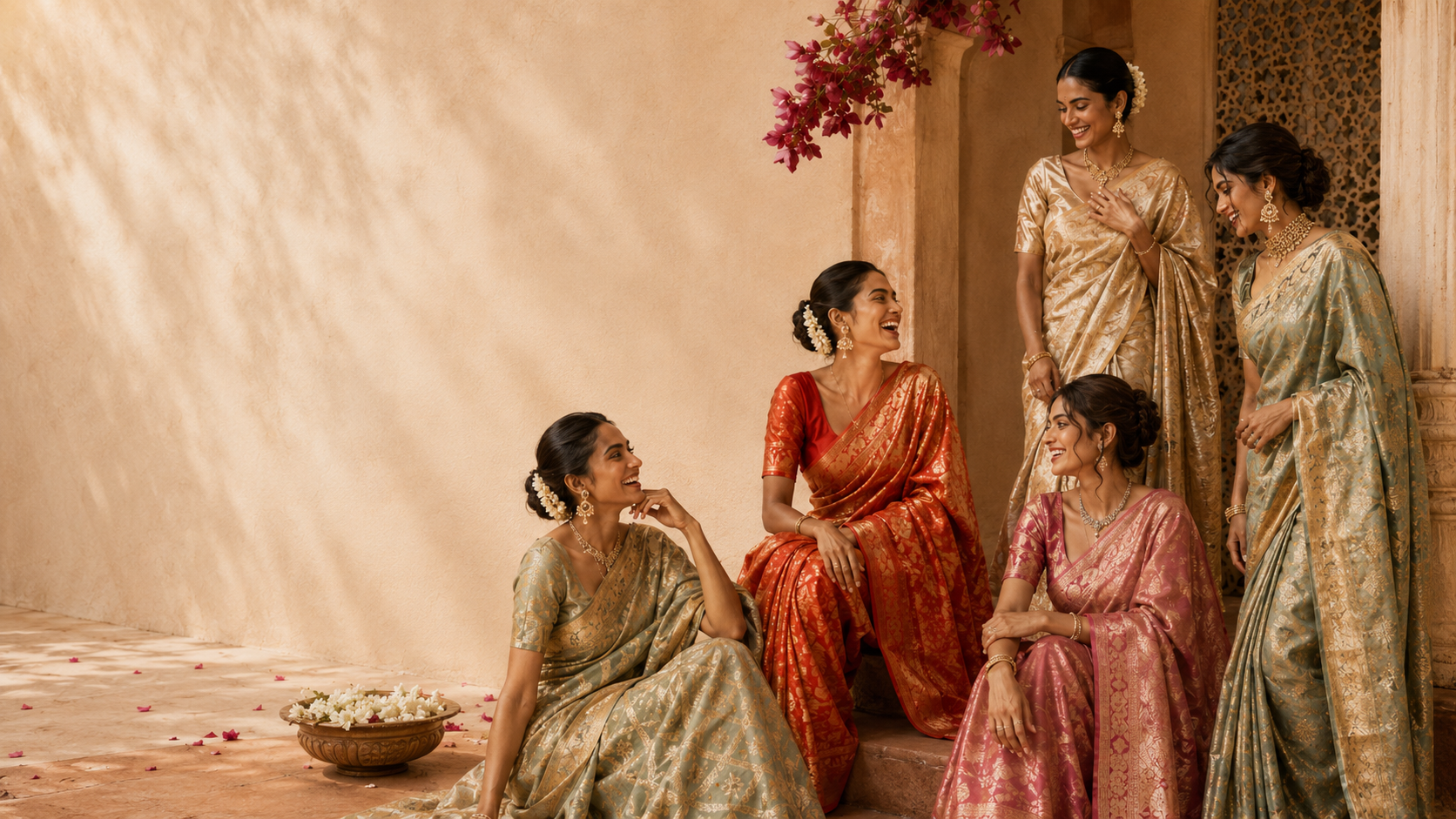
For generations, the Banarasi saree has meant one thing: heavy silk, rich gold zari and the grandeur of a wedding. That image is still loved. But walk into any modern wedding, festive party or even a cocktail evening today and you’ll see a different side of Banaras. There are soft pastels, light organza, minimal motifs and zari that glows quietly instead of shining loudly.
This is the world of designer Banarasi sarees. Modern designers are working with the weavers of Varanasi to reimagine a centuries-old craft for a new generation. At Kaushah, we love this moment, because it keeps the craft alive without losing what makes it Banarasi.
In this blog we look at how designers are reinventing the Banarasi saree, which trends define it today, and how to choose a designer Banarasi that’s both stylish and authentic.
A Classic Worth Reinventing
The Banarasi saree has a long, rich history. Its brocade weaving grew in Varanasi over centuries and was shaped in part by Mughal-era art, with motifs such as the kalga (paisley), bel (floral vine), jhallar (border leaves) and konia (corner motif). Banaras Brocades and Sarees are now protected by a Geographical Indication (GI) tag.
But tastes change. Many modern brides and saree lovers want sarees that are:
- Lighter and easier to wear for long hours
- Versatile, so they work at a wedding, a festive lunch and a party
- Personal, with colours and designs that reflect their own style
Designers saw this and began working closely with Banarasi weavers to create sarees that feel fresh while keeping the craft at their core.
Want to know how to spot a real Banarasi? Read our guide: What Makes a Banarasi Saree Authentic? 7 Hallmarks of the Real Thing.
How Modern Designers Are Reinventing the Banarasi Saree
1. Softer, Modern Colour Palettes
Traditional Banarasis are known for deep reds, maroons, royal blues and emerald greens. Designer Banarasis often explore a much wider range:
- Pastels such as powder pink, mint, lilac, peach and sky blue
- Muted and earthy shades such as sage, beige, dusty rose and mauve
- Bold modern tones such as fuchsia, tangerine and teal
- Classic black and ivory, now popular for evening and cocktail events
These colours make Banarasi sarees feel more contemporary, especially for day weddings, haldi and mehendi functions, and festive gatherings.
2. Lighter Fabrics
Heavy Katan silk is beautiful, but not always practical. Designers are increasingly working with lighter Banarasi fabrics:
- Organza (kora): sheer, crisp and airy, with a delicate shine
- Georgette: soft and fluid, with an easy drape
- Tissue: made with metallic threads for a gentle, all-over glow
- Lighter silk weaves: the richness of silk with less weight
The result is a saree that looks festive but feels comfortable to wear from morning till late at night.
3. Minimal Motifs and Negative Space
Instead of covering the saree in dense brocade, many designers now let the fabric breathe:
- Small, scattered buttis across a plain body
- Slim borders in place of very wide, heavy ones
- A single statement pallu paired with a simple body
- More empty space, so the motifs stand out
This minimal approach suits modern tastes and makes the saree easier to style for many occasions.
4. Fresh, Contemporary Motifs
Alongside the classic paisleys and florals, designers are introducing new motifs:
- Geometric patterns such as stripes, checks, chevrons and grids
- Abstract designs inspired by modern art and architecture
- Nature themes reimagined, such as birds, leaves and animals in a cleaner style
- Personalised motifs, sometimes including initials or meaningful symbols for weddings
The best designers still respect Banarasi tradition and often place modern motifs alongside classic ones, such as a contemporary body with a traditional konia on the pallu.
5. New Ways of Using Zari
Zari is still the soul of a Banarasi, but designers are experimenting with it:
- Antique and matte gold for a softer, vintage glow
- Silver and gunmetal zari for a cooler, modern look
- Copper and rose-gold tones that suit pastels beautifully
- Mixed metals, combining gold and silver in one design
- Less zari overall, with silk threads creating the pattern for a subtler finish
6. Colour-Play Techniques
Designers are also bringing back and updating traditional colour techniques:
- Rangkat: a Banarasi technique where bands of different colours are woven into one saree
- Ombre effects: colour that slowly shifts from one shade to another
- Meenakari highlights: coloured threads added inside zari motifs for detail and depth
- Colour blocking: a body in one colour with a border or pallu in a sharply contrasting shade
7. Beyond the Saree: Banarasi Fusion Wear
Designers are taking Banarasi weaves beyond the six yards:
- Banarasi lehengas for brides and wedding guests
- Banarasi dupattas that dress up a simple suit
- Jackets, blazers and capes made from Banarasi brocade
- Pre-draped sarees and saree gowns for modern, easy styling
- Men’s wear, such as Banarasi sherwanis, bandhgalas and stoles
This helps a new generation enjoy Banarasi craft in ways that fit their lifestyles.
8. Working Hand in Hand With Weavers
The most meaningful part of this reinvention is the partnership between designers and weavers. Many designers now work directly with Banarasi weaving families. They bring new ideas, while the weavers bring centuries of technical skill. This kind of collaboration:
- Creates fresh demand for handloom Banarasi weaving
- Helps preserve techniques such as kadhwa weaving
- Supports weavers’ livelihoods and recognises their artistry
At its best, a designer Banarasi isn’t just a new design. It’s a new chapter in an old craft.
What Stays the Same
Through all this change, some things should never be lost:
- Handloom weaving by skilled Banarasi weavers
- Quality silk and honestly described zari
- The Banarasi weaving language, including brocade techniques and classic motifs
- The origin, rooted in Varanasi and its GI-recognised weaving region
A truly great designer Banarasi changes the look of the saree but respects its soul.
Designer Doesn’t Always Mean Authentic
The word “designer” sells, and it’s sometimes used on sarees that aren’t handloom or even real Banarasi. Before you buy, remember:
- Check whether it’s handloom. Many “designer” sarees are made on power looms.
- Ask about the fabric. Is it pure silk, organza, georgette or a synthetic blend?
- Ask about the zari. Is it real zari, tested zari or synthetic zari?
- Turn the saree over. Handwoven sarees show signs of handwork on the reverse side.
- Look for labels. Check for a GI label, Handloom Mark or Silk Mark where relevant.
- Check the origin. A trustworthy seller should be able to tell you where it was woven.
A designer label should add to authenticity, not replace it.
How to Choose the Right Designer Banarasi Saree
For brides:
A rich silk designer Banarasi in a modern shade such as blush, ivory or wine, with a statement pallu, keeps tradition while feeling personal.
For wedding guests:
A light organza or georgette Banarasi in pastel or jewel tones looks elegant without feeling too heavy.
For day functions:
Choose soft colours, minimal buttis and light fabrics for haldi, mehendi and pujas.
For evening and cocktail events:
Go for black, midnight blue or deep emerald with silver or gunmetal zari for a modern, glamorous look.
For your first designer Banarasi:
A versatile shade with minimal motifs is easy to restyle for many different occasions.
Styling Tips for Designer Banarasi Sarees
- Modern blouses: Try halter necks, high necks, corset blouses or structured sleeves for a contemporary look.
- Minimal jewellery: Let the weave shine with statement earrings or a single choker.
- Contrast pairing: Wear a pastel Banarasi with a bold blouse, or the other way round.
- Belts and capes: Add a waist belt or sheer cape for a fusion look.
- Restyle the pallu: Pin it neatly, drape it like a cape or let it flow freely, depending on the occasion.
Caring for Your Designer Banarasi Saree
- Dry clean only, especially for silk, organza and zari-rich pieces.
- Store it wrapped in soft muslin, away from plastic covers and moisture.
- Refold it every few months so the zari doesn’t crease or break.
- Keep perfume and deodorant away from the fabric.
- Air it out occasionally in the shade to keep it fresh.
Final Thoughts
The Banarasi saree has lasted for centuries because it can adapt. Today’s designer Banarasi sarees show that a classic can be reinvented without losing its roots, with softer colours, lighter fabrics, new motifs and creative uses of zari, all woven by the hands that have kept the craft alive.
At Kaushah, we celebrate this blend of heritage and modern design. Whether you love the grandeur of a traditional brocade or the quiet charm of a modern pastel organza, the best Banarasi is one that suits your style and honours the weaver who made it.
Explore Kaushah’s designer Banarasi saree collection and find a modern classic to make your own.
Frequently Asked Questions
1. What is a designer Banarasi saree?
A designer Banarasi saree is a Banarasi saree with a modern design, such as new colours, lighter fabrics, minimal motifs or creative zari work, usually made through collaboration between designers and Banarasi weavers.
2. Are designer Banarasi sarees handloom?
Some are and some aren’t. Always ask whether the saree is handwoven, and check for signs of handwork and labels such as the Handloom Mark.
3. Which fabrics are popular for designer Banarasi sarees?
Organza (kora), georgette, tissue and lighter silk weaves are popular because they’re easier to wear while still looking festive.
4. Are designer Banarasi sarees suitable for brides?
Yes. Many brides now choose designer Banarasis in modern shades such as blush, ivory or wine, with traditional motifs and a statement pallu.
5. What colours are trending in designer Banarasi sarees?
Pastels, muted earthy tones, bold modern shades and classic black and ivory are all popular choices.
6. How do I know if a designer Banarasi saree is authentic?
Check the fabric, zari type, weave, reverse side and origin, and look for a GI label, Handloom Mark or Silk Mark where relevant.
Woven in legacy, draped in you.
Keep reading
More from the Journal


Our Story Continues
A legacy reimagined for the woman of today.
Silk and cotton, organza and georgette, heritage weaves and contemporary design, so every woman can find the drape that feels made for her.